Spring Planting in Missouri: Timing Around Late Frosts
A warm spell can make a Missouri garden look ready for everything, but one cold night may still damage tender seedlings and transplants. The safest approach is not to treat a calendar date as a guarantee. Use local frost probabilities, crop tolerance, soil conditions, and the forecast together to decide what to plant, what to protect, and what to hold back.
Why late frosts are hard to schedule around
Spring weather in Missouri can shift quickly. Several mild days may be followed by a cold front, and gardens in different parts of the state can face different conditions on the same night. Even a reliable average frost date is a planning reference, not a promise about the weather in a particular year or at a particular address.
Frost dates describe probabilities derived from weather observations. A date associated with a 50% chance of frost, for example, is not the date frost always ends; it indicates a particular likelihood based on the data and method used. Dates can also differ depending on the weather station and the period of records being considered. Before using a date to plan planting, check what probability it represents and which station or area it describes. Missouri Frost Dates and Hardiness: Master Planting Calendar provides broader context for using freeze and frost information.
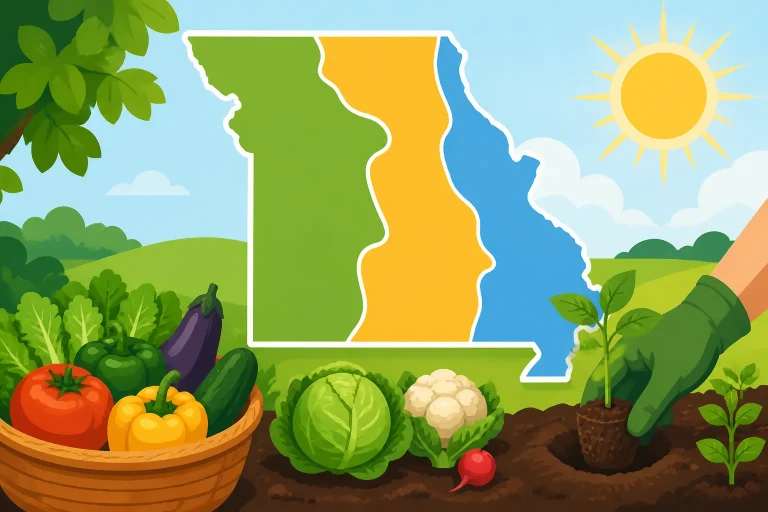
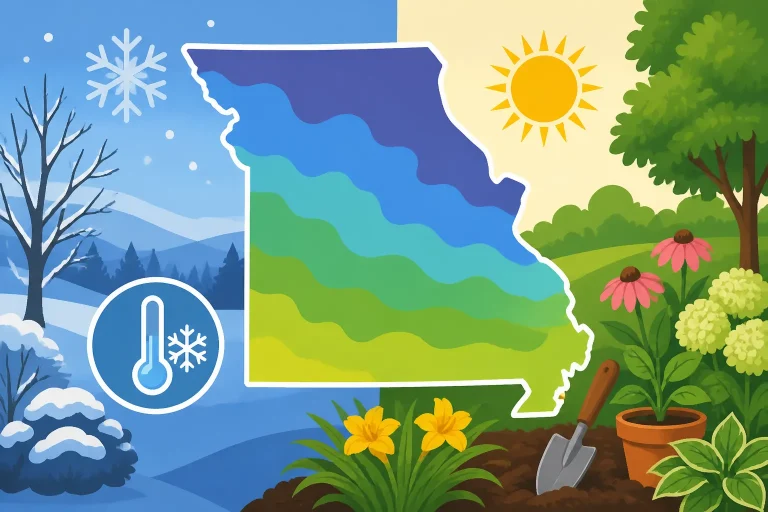
Missouri’s regional variation matters, too. Northern areas generally warm later in spring than southern areas, but regional labels cannot capture every backyard. Elevation, slope, nearby water, buildings, tree cover, and cold-air drainage all influence the conditions plants experience. A low spot can collect cold air on a clear, calm night, while a nearby slope may stay a little warmer. These differences can make a neighborhood garden behave differently from a weather station several miles away.
It also helps to separate frost from a freeze. Frost forms when surfaces cool enough for ice crystals to develop; a freeze involves air temperatures at or below freezing. Either can harm plants, but the damage depends on how cold it gets, how long the cold lasts, wind and moisture conditions, and the plant’s stage and tolerance. A light frost may mark leaves without killing a hardy crop, while a harder or longer freeze can injure tender growth. See Last Frost vs Last Freeze: Understanding the Difference for more on why these terms are not interchangeable.
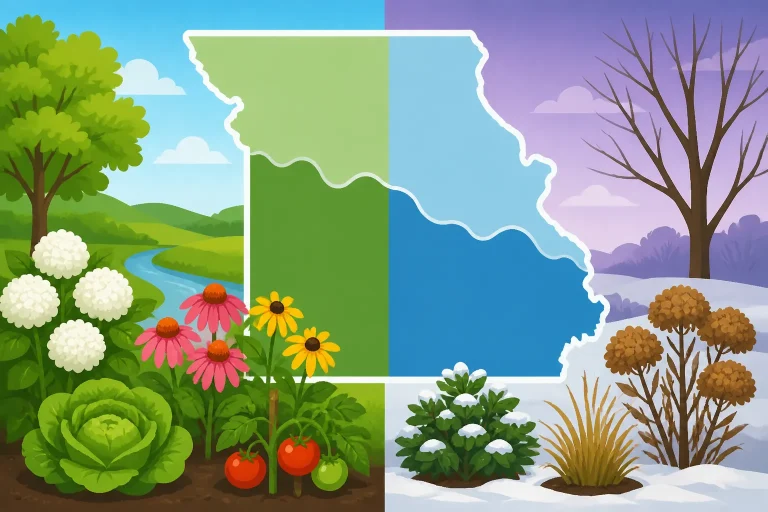
Hardiness zones are useful for assessing how well perennial plants may survive winter, but they do not tell you when to sow spring vegetables or move heat-loving transplants outdoors. A plant’s winter survival range is a different question from whether its new spring growth can tolerate a cold night. Why Hardiness Zones Differ From Spring Planting Dates explains that distinction.
The practical takeaway is simple: use frost information to estimate risk, then make planting decisions crop by crop. A forecast, the garden’s location, the plant’s tolerance, and the soil’s condition all matter. Waiting for a single “safe date” can delay crops that handle cool weather, while planting every crop after the first warm spell can expose tender plants to avoidable damage.
Sort crops by how much cold they can handle
A useful spring plan begins by grouping crops according to their tolerance, not by treating the whole garden as one planting event. Seed packets and transplant labels are helpful starting points, but the plant’s growth stage and the type of cold expected also matter. A seed in the ground, a hardened-off transplant, and a tender plant that has just moved outdoors do not respond to spring conditions in exactly the same way.
| Crop group | General approach | Main risk to watch |
|---|---|---|
| Cold-tolerant crops | Often fit earlier spring planting, when soil is workable and conditions suit the crop | Cold, wet soil can slow germination and growth |
| Moderately cold-tolerant crops | Plant according to the crop’s guidance and local forecast; protect young plants if needed | Sudden cold can set back tender new growth |
| Warm-season crops | Wait for more settled warmth and suitable soil; have a protection plan for unexpected chills | Frost or a freeze can cause severe injury or kill plants |
| Containers and starts indoors | Move outdoors gradually, then bring in or cover when conditions threaten | Abrupt exposure, wind, and cold nights can stress plants |
Cool-season crops
Some vegetables tolerate cool spring conditions better than heat-loving crops. That does not mean they grow well in every cold snap or in saturated ground. Cold-tolerant crops still need conditions that allow seeds to take up water and grow, and prolonged cold or wet soil may delay emergence or encourage problems.
For direct-sown crops, check the crop’s recommended soil conditions and the instructions on the seed packet. Soil that looks dry at the surface may remain cold or wet below. If the bed is sticky, waterlogged, or easily compacted, waiting for it to drain can be better than sowing into it. The article Why Dry Surface Soil Can Deceive Missouri Gardeners covers why surface appearance alone can be misleading.
Transplants need a little more care than seeds already in the ground. Plants raised indoors or purchased from a greenhouse may have had limited exposure to wind, bright sun, and outdoor temperature swings. Even a crop that generally tolerates cool weather can be stressed if its transplant has not had time to adjust. Hardening and Transplanting Missouri Spring Crops Outdoors explains how gradual exposure helps prepare seedlings for outdoor conditions.
Warm-season crops
Crops that need warm weather should not be rushed outside just because afternoon temperatures feel pleasant. Warm-season plants can be vulnerable to cold nights, and soil that has not warmed enough can leave roots slow to establish. A cold spell may stall growth even when it does not kill the plant outright.
Tomatoes, peppers, cucumbers, melons, beans, and other heat-loving crops do not all share the same threshold or schedule. Use crop-specific planting guidance rather than assuming one date works for all of them. For tomatoes, consult When to Plant Tomatoes Outdoors Across Missouri Regions; for a broader comparison of crops, see Tender vs Hardy Crops: Missouri Frost Tolerance in Spring Gardens.
The condition of a transplant also matters. A sturdy plant with several healthy leaves may cope with outdoor conditions better than a small, recently emerged seedling, but size does not make a frost-sensitive crop frostproof. Hardening off improves readiness; it does not replace frost protection or make an unsuitable planting window safe.
Seeds and transplants are different decisions
Direct-sown seeds and nursery transplants face different risks. Seeds may remain dormant or emerge slowly if conditions are unfavorable. A transplant already has exposed leaves and stems that can be injured by frost, wind, or a rapid change from indoor conditions.
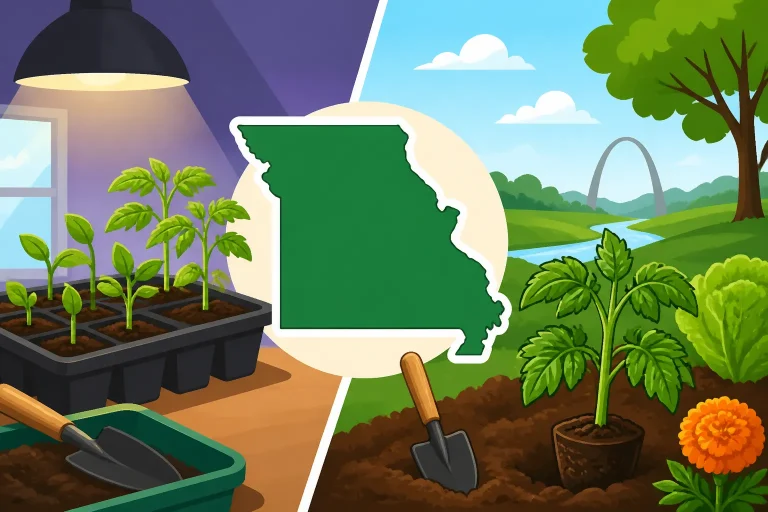
Starting seeds indoors can give a crop a head start, but it also creates a timing challenge: seedlings may be ready before outdoor conditions are. If starts become crowded or leggy while waiting, the solution is not necessarily to plant them outside early. Provide suitable light and growing conditions, continue hardening them off when the weather allows, and protect them if they must be outdoors during a cold spell. Starting Seeds Indoors vs Buying Garden Transplants can help you weigh those approaches.
Build a planting decision from local risk, not a single date
A practical planting decision combines several kinds of information. No one signal is enough on its own: the average frost date gives context, but the forecast describes near-term conditions; soil readiness matters for seeds and roots; and the crop’s tolerance determines what a cold night could mean.
Use this process before each planting:
- Identify the crop and its cold tolerance. Check seed packets, transplant labels, or crop-specific guidance. Decide whether it can tolerate cool conditions or needs warmer weather.
- Find a relevant local frost reference. Look for data from a nearby weather station and note the probability attached to the date. A date with a lower frost probability still does not guarantee that frost cannot occur.
- Check the forecast for the planting period. Look beyond the daytime high. Nighttime lows, the length of the cold spell, wind, cloud cover, and the chance of frost all affect risk.
- Assess the garden site. Consider whether the bed sits in a low spot, on a slope, beside a structure, or in a place exposed to wind. A station reading is useful context, not an exact measurement of the plant’s leaves.
- Check soil conditions. Make sure the bed is workable and appropriate for the crop. Cold, saturated soil can delay establishment even when the air feels mild.
- Decide whether protection is practical. If a cold night is possible, confirm that covers or another suitable protection method are ready and can be used effectively.
- Plant in stages when uncertain. Sow or transplant a portion first, then wait for conditions to become clearer before committing the rest of the bed.
The probability attached to a frost date can guide how cautious to be. A gardener willing to accept some risk may choose to plant earlier with protection ready. Someone who cannot cover plants, or who would lose valuable starts if they are damaged, may prefer a more conservative window. Neither approach is universally right; the best choice depends on the crop, the value of the planting, and how much risk you can reasonably manage.
Forecasts should also be treated as changing information. A week of warm weather may encourage growth, but an outlook several days away can shift. Recheck conditions as planting approaches, especially for tender transplants. If there is uncertainty, delay a few days or plant only a portion rather than putting every seedling at risk.
For a more detailed look at using local probabilities, see Using Spring Freeze Probabilities to Schedule Planting. Weather station records can help you understand historical patterns, but they do not predict a specific spring. Looking at Historical Weather Station Records to Judge Frost Risk offers more background on interpreting those records.
Use the garden itself as part of the forecast
A weather forecast describes conditions over an area; your plants experience conditions at their exact location. That distinction matters in Missouri gardens, where small changes in terrain and exposure can influence cold-night risk.
Watch for cold-air drainage
On clear, calm nights, cold air can settle into low areas. A garden at the bottom of a slope or in a dip may be colder than a nearby bed on higher ground. Fences, dense plantings, and other barriers can sometimes slow air movement, so the coldest part of a yard is not always the most obvious one.
Keep notes about which parts of the garden show frost first and where damage appears after a cold night. Over time, those observations can help you place the most frost-sensitive crops in a more favorable part of the yard. If moving beds is not practical, use the vulnerable area for crops that tolerate cool conditions and reserve warmer locations for tender plants.
Account for structures and exposure
A wall, fence, or other structure can influence wind and heat around a garden, but the effect depends on its placement and the weather. A sheltered space may reduce exposure to wind, while a site beneath a roof overhang may receive less rain. Do not assume that a spot beside a building is automatically safe from frost: exposed leaves can still cool, and cold air may collect near the structure.
Containers deserve particular attention. They are exposed on more sides than plants rooted in the ground, and their growing medium can cool more quickly. A container can be moved to a sheltered place when a cold night is expected, but it still needs appropriate light and watering. Large pots can also be heavy, so choose a location you can manage before planting them.
Use observations, not assumptions
A simple garden thermometer can add useful context, especially if placed near the plants rather than against a warm wall or in direct sunlight. It will not replace an official weather station or forecast, but it can show how a site compares with the broader local reading.
After a frost warning, check the garden in the morning. Look at exposed leaves and tender growing tips, but avoid deciding that every plant is lost based on immediate discoloration. Damage may become clearer over time, and some crops can recover from limited injury. Record what happened and where. Those observations can improve next season’s layout and help you judge whether the same location needs more protection.
Prepare for cold nights before you plant
Protection works best when it is planned in advance. A last-minute cover that blows away or touches tender leaves may provide less help than expected. Before planting valuable transplants, decide what you will use, where it is stored, and how you will secure it.
Covers and temporary protection
A frost blanket or other suitable garden cover can reduce heat loss around plants when properly placed and secured. It should cover the vulnerable plants and reach close to the ground so it can hold some warmth. Avoid leaving a cover loose where wind can lift it, and take care not to crush delicate growth. The right material and method depend on the product and the plants being covered.
Plastic can help in some setups, but it should not rest directly on foliage during a freeze. Contact can increase injury where leaves touch the material. Covers may also trap heat during sunny weather, so remove or ventilate them when conditions warm enough to avoid overheating. Follow the manufacturer’s instructions for any purchased product. Emergency Frost Protection Covers for Tender Missouri Seedlings provides more detail on choosing and using temporary protection.
Protection has limits. A cover can reduce exposure to a light frost, but it cannot guarantee safety during a prolonged or severe freeze, especially if it is poorly secured or the plants are already stressed. If the forecast calls for conditions beyond what your setup can reasonably handle, moving containers indoors or postponing planting may be the safer choice.
Water and soil considerations
Moist soil can retain and release heat differently from dry soil, but that does not make watering a substitute for covering vulnerable plants. Avoid turning a cold, poorly drained bed into a wetter one when roots are already struggling. If irrigation is needed for the crop, use good watering practices and consider the forecast as part of the decision.
Soil temperature can be more useful than an air-temperature impression when deciding whether to sow crops that prefer warmth. A soil thermometer provides a direct reading at the planting depth; compare it with crop-specific recommendations rather than relying on a general rule. If you do not have a thermometer, seed packet instructions and local guidance can help you avoid planting heat-loving seeds into soil that is still too cold.
Delay, divide, or protect
The choice is not limited to either planting everything or waiting indefinitely. You can:
- Delay tender crops while planting cool-tolerant ones.
- Plant a small first batch and hold back the rest.
- Keep transplants in a protected space while conditions improve.
- Use a cover for plants that are already in the ground.
- Choose a different location for the most sensitive crops.
These options reduce the chance that one cold night will affect the entire planting. They also spread out labor and harvests, which can be helpful when spring conditions are unpredictable. Can You Plant Before the Last Spring Freeze Risk Clears? discusses the trade-offs involved in planting while some frost risk remains.
Adjust the plan when spring turns cold again
A cold forecast after planting does not always mean disaster, but it does call for a crop-by-crop response. The best action depends on the expected severity, how long the cold will last, the plant’s condition, and whether it is in a container or the ground.
Before a cold night:
- Check the expected low and timing of the coldest hours.
- Identify which plants are most vulnerable and where they are located.
- Secure covers before conditions become difficult to manage.
- Move containers to a sheltered area if doing so is practical.
- Avoid leaving covers in place through warm, sunny conditions unless the product instructions call for it.
After the cold night, wait until plants have thawed before handling fragile leaves. Assess the damage later rather than immediately removing plants that may still have healthy stems or growing points. Cold injury can look dramatic, but the extent of damage varies. If a plant’s growing point is intact, it may produce new growth; if the stem or crown is badly damaged, recovery is less likely.
Do not rush to prune or replace every injured plant at once. Give it time to show whether it is recovering, while keeping an eye out for secondary stress such as waterlogging or pest damage. If a plant is clearly dead or its damaged tissue is interfering with new growth, remove it as appropriate for the crop. For uncertain cases, use a reputable local horticultural resource or seek identification help.
A setback can also be an opportunity to revise the schedule. If early transplants were damaged, replace only what makes sense for the season and the remaining time available. Some crops can still produce after later planting; others may not have enough time or suitable conditions. Check the expected time to maturity and the crop’s needs before deciding. Late Planting Options in Missouri for Summer and Fall Harvests discusses ways to adapt a planting plan when the first attempt does not work.
Keep a flexible Missouri spring calendar
A useful planting calendar is a sequence of decisions, not a single day when all crops become safe. In Missouri, that means matching each crop to its tolerance and paying attention to local conditions as the season unfolds.
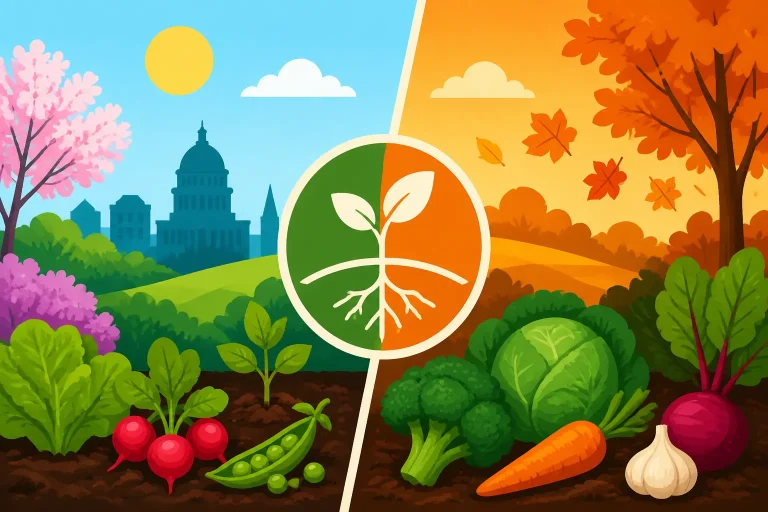
Start with a rough order: plant crops that can handle cool conditions first, then move to crops that need greater warmth as both the forecast and soil become suitable. Keep a record of planting dates, frost warnings, cover use, and crop response. A few seasons of notes can reveal patterns in your own yard that a regional calendar cannot show.
It is also worth separating three questions that are often confused:
- Can the crop survive winter in this area? Hardiness information helps answer this for perennial plants.
- Can the seed germinate or roots establish in the current soil? Soil conditions and crop guidance matter here.
- Can the plant tolerate the next cold night? Frost probabilities, the forecast, location, and protection determine the risk.
A planting decision is stronger when all three questions are considered where relevant. For vegetables, winter hardiness is usually less important than current soil and air conditions. For perennial herbs or landscape plants, winter survival may matter, but newly planted growth can still be vulnerable to spring cold.
Use regional calendars as a starting point, not a prescription. A schedule for St. Louis or Springfield may help orient you, but local station data, site conditions, and crop-specific requirements should guide the final choice. Spring Planting Schedule for St. Louis Home Gardens and Spring and Fall Planting Windows for Missouri Culinary Herbs are useful examples of how timing differs by crop and location.
The goal is not to eliminate all risk. Missouri spring weather makes that unrealistic. The goal is to avoid taking unnecessary risks with sensitive plants, while still making good use of the cool part of the growing season. Plant in stages, protect what you cannot replace easily, and let current conditions refine the calendar.
Frequently Asked Questions
Is there one safe date to plant everything in Missouri?
No. Missouri spans different climate conditions, and crops have different cold tolerances. Use local frost probabilities and the forecast alongside soil conditions and crop-specific guidance.
Does a frost-free date mean frost cannot happen afterward?
No. Frost dates describe probabilities, not guarantees. The likelihood depends on the date, station, and data period, and weather varies from year to year.
Can a hardiness zone tell me when to plant vegetables?
Not reliably. Hardiness zones describe average winter cold patterns for perennial survival, not the timing of spring frost or the soil warmth needed by vegetables.
Should I cover plants whenever frost is forecast?
Consider the crop, expected conditions, and the cover’s limits. Use a suitable cover as directed, secure it well, and remove or ventilate it when conditions warm. If a severe or prolonged freeze is expected, postponing planting or moving containers may be more prudent.
Disclaimer
This article is for general informational purposes only and does not constitute professional advice. Laws, prices and regulations vary by location and change over time. Consult a qualified professional for guidance on your specific situation. Missouri Gardening Guide is not a government agency and is not affiliated with any university extension, state department of agriculture or other government agency.